Buying guide
SADU brand or private label: what fits your business?
The short answer
Choose SADU branded products when selling an existing supplier brand fits your business. Consider private label when your own brand has a defined role and you can support the product selection, packaging approvals and purchasing commitment.
Compare actual proposals for both routes before deciding which offers the better commercial fit.

Supplier brand
When the SADU brand can fit
An existing branded range can suit a wholesaler or retailer that wants to add relevant product categories under the supplier’s identity.
You still need to evaluate the products, customer fit and commercial conditions, but your team is not creating a new consumer-facing brand and packaging identity for the project.
Own brand
When an own brand can fit
Private label can be relevant when you already have a brand strategy, a clear customer proposition and sufficient demand for the proposed items. It gives your business a role in defining the range and packaging, within the options agreed with the supplier.
That also creates work for your team: briefing, approvals and maintaining consistent product information.
Cost and stock
Compare the actual stock and cost commitment
Request opening and repeat order conditions for both routes. Existing stock and a new own brand production project can have different cost structures and schedules.
Do not assume that the lower purchase price per item also means the smaller total commitment or a faster introduction.
Responsibilities
Check who owns each decision
Agree who approves product specifications and artwork, who maintains item information, and how changes are communicated. For a private label project, the supplier’s role and the brand owner’s role should be explicit.
Clarify these points before selecting the route, particularly when the same range will be sold in several countries.
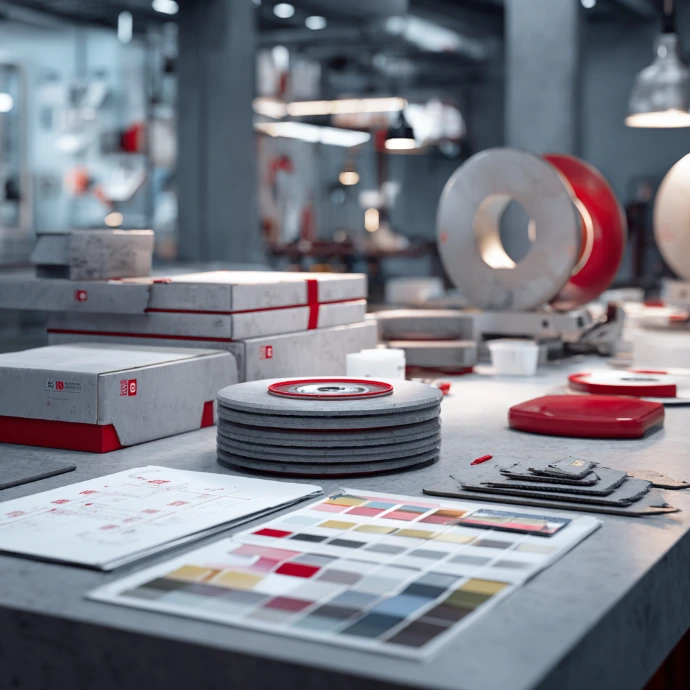
Combining
Use different routes where they serve different needs
A business may choose a supplier brand for one category and an own brand for another. Make that decision by category and customer need.
Keep the reason for each route visible so your assortment does not become a collection of overlapping products with no clear distinction.
Comparison
Questions for comparing the two routes
A comparison of purchasing questions and scope of work, not a standard price list or a commitment on lead times.
Brand identity
SADU branded products: SADU identity for the selected products
Private label: Your brand under an agreed product and packaging brief
Preparation
SADU branded products: Assess the product range and trading conditions
Private label: Also agree branding, artwork and project approvals
Quantities
SADU branded products: Confirm conditions for the selected items
Private label: Confirm project quantities by item and pack format
Timing
SADU branded products: Confirm actual stock and delivery arrangements
Private label: Confirm development, approvals and supply schedule
Information
SADU branded products: Use agreed product references and available data
Private label: Agree references, packaging and data responsibilities
Cost comparison
SADU branded products: Evaluate the actual supply proposal
Private label: Also assess applicable setup and project costs
Brand choice buying guide
Compare the options for your assortment
Tell SADU which categories you want to source and whether you are considering the SADU brand, your own brand or both.
Questions from buyers
Frequently asked questions about choosing a brand route
Below you will find answers to questions that buyers often ask us.
Can’t find your question?
Read also
It may be, if the available products and minimum quantities fit your demand and budget. Request a focused proposal rather than assuming that either a small or a large range is always required.
You can discuss a separate private label project. Do not assume that an existing product can be relabelled on the same terms; confirm the available specification, quantities, packaging and schedule.