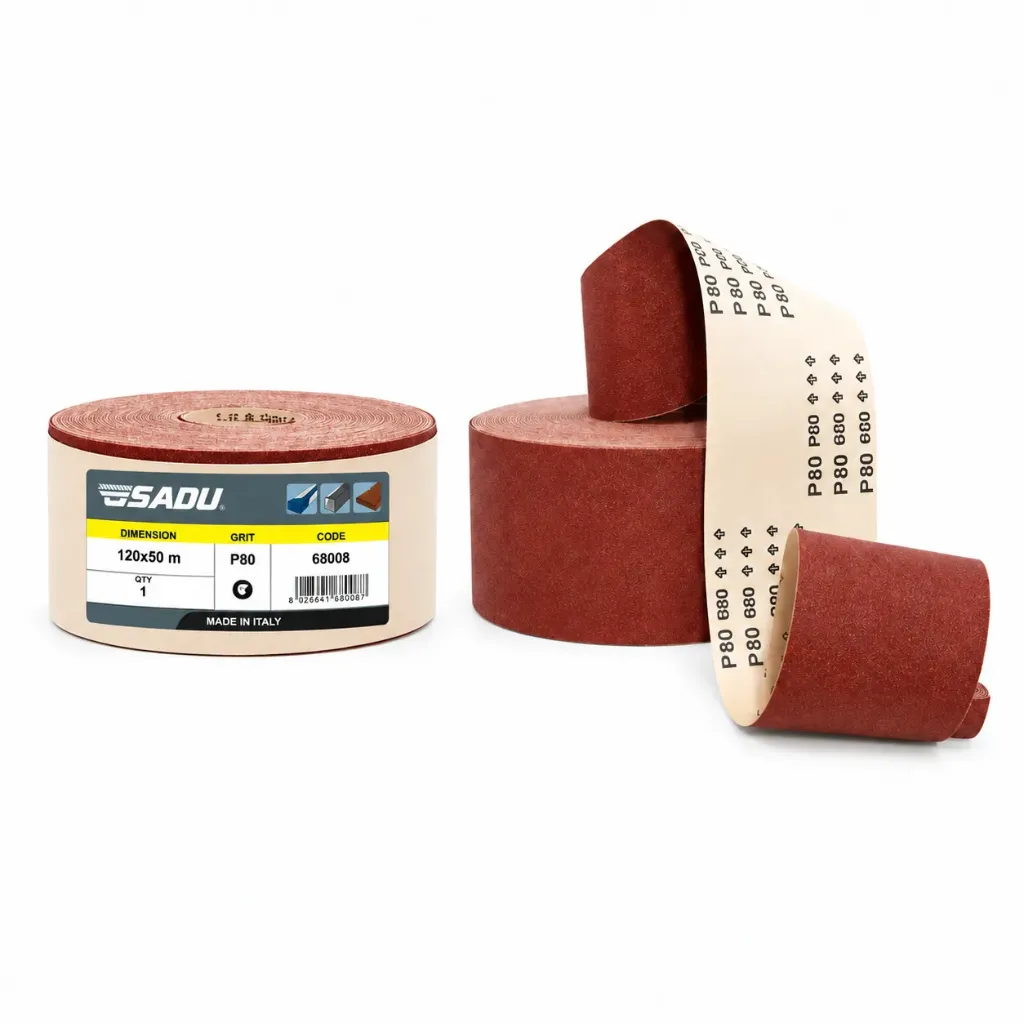
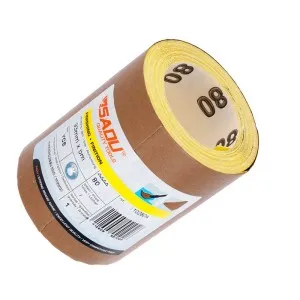
Sanding rolls with a paper backing are a practical choice for manually sanding flat surfaces and various finishing jobs. The sandpaper is supplied on a roll and can easily be cut to the desired length. This way you only use what's needed for the workpiece and can quickly switch between different grit sizes during preparation, intermediate sanding and fine finishing.
Paper backing for controlled and even sanding
Can be cut to size according to the application
Suitable for wood, lacquer, filler and various materials
For hand sanding or use with a matching sanding block
Available in various grit sizes
Practical for renovation, painting and workshop use
Application on wood, lacquer and filler
Paper sanding rolls are widely usable in woodworking and surface preparation. You can use them to smooth solid wood and sheet material, refine saw or plane marks and prepare a wooden surface for oil, varnish or lacquer. Depending on the specific grit and coating, they are also suitable for filler, old lacquer layers, primers and certain plastics. That makes these rolls handy for joiners, painters, interior fitters and other craftsmen who regularly touch up smaller surfaces or repairs by hand.
Paper backing for flat and controlled sanding work
A paper backing gives the abrasive enough stability to let the grit work evenly over the surface. On flat sections this provides a predictable sanding pattern and good control over material removal. For manual work you can use the paper loose, fold it or place it around a matching sanding block. A sanding block distributes the pressure more evenly and helps prevent your fingers from creating deep sanding marks locally. For sharp curves or strongly shaped parts, a more flexible cloth sanding roll is usually better suited.
Grit choice and clogging of the sandpaper
Only start with a coarse grit when strong material removal is needed. Medium grits are suitable for levelling the surface, while finer grits are used before lacquering or for refining an earlier sanding pass. With wood, lacquer and filler, sanding dust can build up between the grains. A suitable grit distribution or coating can help limit this, but even then it's important to check the sandpaper regularly and replace it in time.
Work without excessive pressure and, for the finer steps, preferably sand wood along the grain direction. Remove dust between sanding passes, especially before a new finishing layer. When dry sanding, use suitable dust control and wear suitable eye and respiratory protection.